



- Last Updated On :
CENTRE FOR COMMUNITY MEDICINE
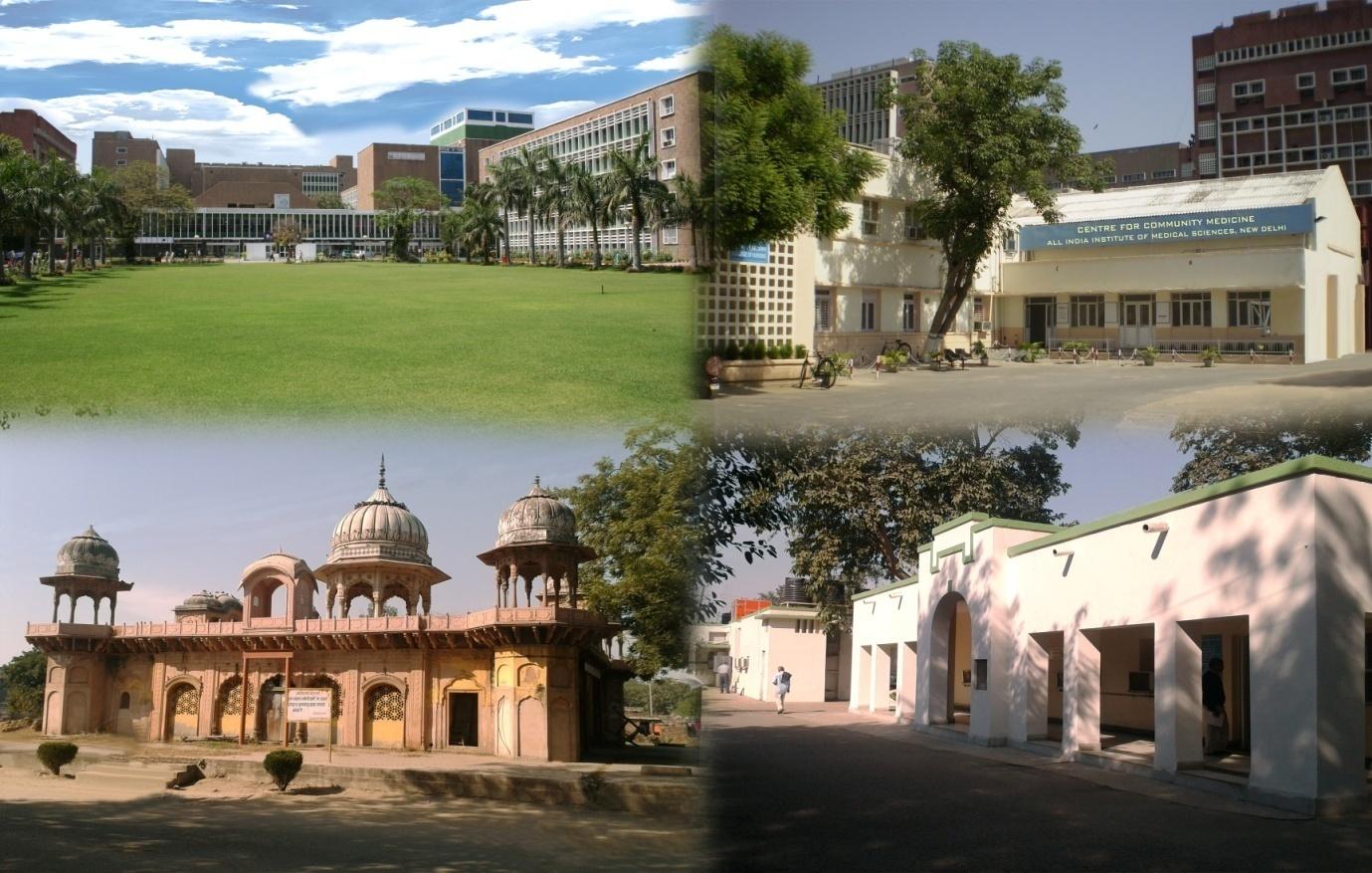
The All India Institute of Medical Sciences (AIIMS) was established by the Parliament of India in 1956 as an Institute of national importance with the objective “to develop patterns of teaching in undergraduate and postgraduate medical education in all its branches so as to demonstrate a high standard of medical education to all medical colleges and other allied institutions in India”. Since the inception of the institute, the Centre for Community Medicine (CCM) has been a key department at AIIMS. The Centre aims to produce high quality public health professionals and community physicians. The Centre is consistently working towards discovery of new knowledge in domain of public health, advocacy for application of new ideas in health care of populations. The main focus area of the Centre has been on evolution of a replicable model of comprehensive health services and providing consultancy to strengthen capacity of health organizations at national and international level.
Vision
To establish and maintain rural and urban health organizations which will form centres for the field training of the medical, dental, and nursing students of the Institute as well as for the research into community health problems. This is in consonance with the stated function of AIIMS, Section 14, f(v) of AIIMS Act, 1956
Future Vision
To respond to the evolving national public health needs in keeping with global standards of teaching, research, and service by creating a professional workforce to translate knowledge to action and thereby contribute towards HEALTH FOR ALL .
History of the department/ timeline
|
|
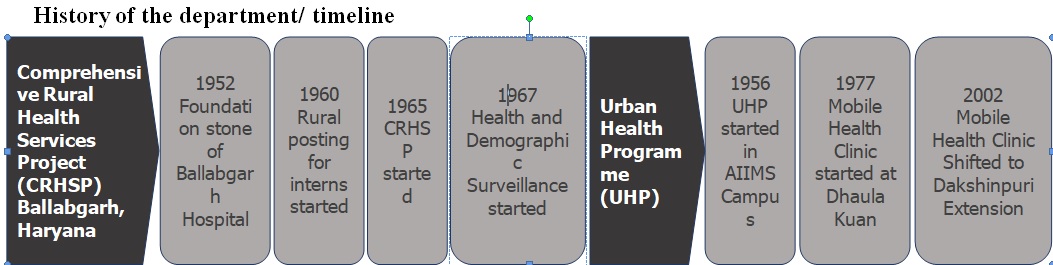
Urban Health Program
The Urban health program of the Centre provides community based health services to marginalised population of an urban resettlement colony in Dakshinpuri Extension, Ambedkar Nagar, New Delhi. Preventive, promotive and curative health services along with basic laboratory services are provided to the population covered by the Urban health program.
Apart from urban field practice areas, the urban health program also comprises of:
- AIDS Education and Training Cell (AETC) includes telephone helpline “Shubhchintak” and internet based helpline “eShubhchintak”
- National Service Scheme (NSS) Unit.
The details of the urban health program of the Centre are available in following link
Rural Health Program
‘Rural Health Program: Ballabgarh HDSS
The Rural Health Program, formally established in 1965 as the Comprehensive Rural Health Services Project (CRHSP), Ballabgarh, is a landmark collaborative venture between the Haryana State Government and AIIMS. It functions as a robust Health and Demographic Surveillance System (HDSS), providing a foundation for longitudinal research and community-based service delivery.
The project comprises:
-
A 50 bed hospital with 24 hr emergency and obstetric facilities. The hospital also provides outpatient services in medicine, surgery, paediatrics, gynaecology & obstetrics, eye, ENT, psychiatry, physical medicine & rehabilitation, paediatric surgery, dental care, homeopathy, NCD clinic, ANC clinic, immunization clinic and is supported laboratory, radiological and ultra-sonograph services.
-
Add this text: Intensive Field Practice Area (IFPA): Providing healthcare services to 28 villages in the Ballabgarh block of Faridabad district in Haryana State, serving a population of over 1,00,000. Both facility based and domiciliary preventive, promotive and curative services are provided to the rural population covered under the IFPA. The IFPA serves as a premier site for translational research and evidence-based public health practice.
The details of the rural health program of the Centre are available in following link
